
Rukam Capital spotlights Gen Alpha consumer trends in its ‘Gen Alpha Decoded: The Consumer-Brand Dynamic’ report
Gen Alpha a digitally immersed generation accounts for over a quarter of the Indian population. With 73% of this generation already having access to personal smartphones and 60% accessing laptops, this is a generation that found liberation inside technology. To further understand Generation Alpha, Rukam Capital has unveiled a one of its kind reports, ‘Gen Alpha Decoded: The Consumer-Brand Dynamic’ that details on how they are redefining consumer behaviour and brand engagement.
Gen Alpha is not defined by technology alone, but by how they use digital ecosystems to negotiate autonomy, identity, and influence within tightly structured lives. They are increasingly taking the driver’s seat in shaping consumption, culture and everyday decisions. Nearly 50% of Gen Alpha ask for a specific brand pointing to early brand consciousness with 66% of Gen Alpha children influencing everyday decisions, reflecting their increasing autonomy within households.
Commenting on the launch of the report, Archana Jahagirdar, Founder and Managing Partner, Rukam Capital, said, “Gen Alpha is one of India’s youngest generations that has the potential to influence up to 80% household purchase decisions. They are digitally fluent with limitless access to content, yet are shaped by algorithms, micro-trends, peer validation, and early ethics on sustainability and inclusivity. As India's D2C brands, edtech, content creators, toys, F&B, and fashion vie for their loyalty, assumptions must yield to evidence. With the unveiling of ‘Gen Alpha Decoded:The Consumer-Brand Dynamic’ report, we aim to understand the behavioural shifts, preferences, and trends that drives a 10 year old's purchase decisions and everyday choices.”
The report, Gen Alpha Decoded: The Consumer-Brand Dynamic, reflects on the emerging trends of Gen Alpha who are independent, digitally engaged and have a strong preference for utility-driven choices across six themes.
Gen Alpha’s digital exposure is extensive, with content streaming platforms like YouTube dominating their daily consumption, but their influence extends far beyond screens as they remain constantly aware of what is considered “cool,” often linking it to achievement and social validation. They actively assert their preferences to ensure individuality for when it comes to the brands they wear, the toys they choose, and the snacks they consume, highlighting their growing influence in everyday decision-making.
The survey was conducted in collaboration with YouGov, with over 2000+ respondents capturing both parents’ perspectives and Gen Alpha viewpoints, highlighting evolving behaviours across digital engagement, financial awareness, and consumption patterns.
Key themes from the report “Gen Alpha Decoded: The Consumer-Brand Dynamic”
Money Curious Generation
● 7 in 10 Gen Alpha children show curiosity about earning money, whether through chores, crafts, or digital activities.
● 25% ask before spending, indicating financial discussions with parents.
● 17% spend quickly on small treats or toys, balancing saving with impulse purchases.
● 14% spend on digital purchases, such as games, skins, or subscriptions.
● 45% are very interested in earning.
● 31% of children save most of their pocket money, showing early formation of saving habits.
Rise of the Informed, Influential Young Consumer:
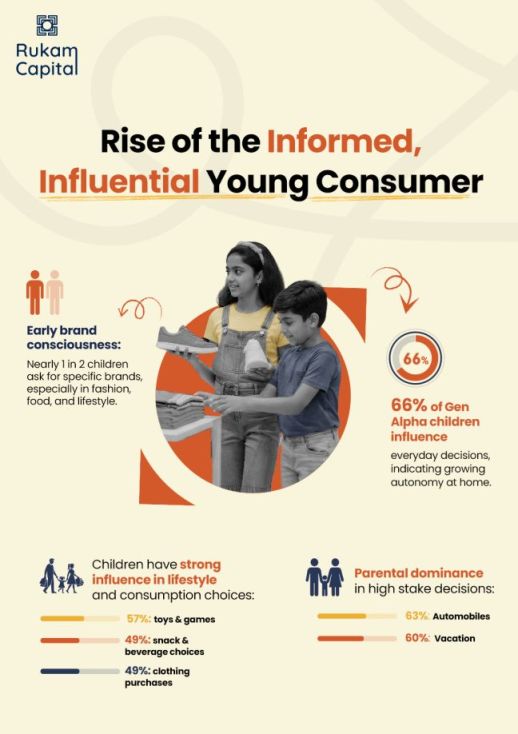
● Early brand consciousness: Nearly 1 in 2 children ask for specific brands, especially in fashion, food, and lifestyle.
● Decision drivers:
○ 34% influenced by product features and functionality
○ 34% influenced by educational value
● Sustainability awareness: 31% consider environmental impact in brand choices
● Brand switching triggers:
○ 42%: new product features or technology upgrades
○ 37%: social media trends and influencers
○ 35%: parent recommendations
Emergence of conscious consumers
● High social awareness: Many children exhibit moderate to high understanding of social issues
● Top issues of concern:
○ 55%: Helping others
○ 54%: Healthy living
○ 49%: Safety and responsible digital use
○ 48%: Respect for diversity (gender, culture, abilities)
Achievement, Choices and Influences
● For Gen Alpha, being “cool” is linked to achievement:
○ 29% associate coolness with academic success
○ 27% with excelling in sports or extracurricular activities
● Food preferences reflect a mix of health and indulgence:
○ 24% prefer healthy or organic meals
○ 21% prefer fast food or quick bites
● Music preferences reflect both mainstream and digital culture:
○ 21% prefer Bollywood music
○ 16% follow trending social media tracks
○ 14% listen to regional Indian music
● Dance preferences reflect a mix of tradition and global trends:
○ 26% prefer Bollywood dance
○ 16% classical Indian dance
○ 16% freestyle dance
● YouTube dominates discovery:
○ 43% using it to learn about food
○ 48% for music
○ 46% for dance
The Negotiators
● 66% of Gen Alpha children influence everyday decisions, indicating growing autonomy at home.
● Strategic influence:
○ 22% wait for the right moment to ask
○ 19% use reasoning to persuade
○ 15% wait and ask again when refused
○ 13% seek support from another family member
● Children have strong influence in lifestyle and consumption choices:
○ 57%: toys & games
○ 49%: snack & beverage choices
○ 49%: clothing purchases
○ 43%: adventure activities or outdoor sports
○ 42%: eating out or takeaways
○ 40%: EdTech or learning apps
● Parental dominance in high stake decisions:
○ 63%: Automobiles
○ 60%: Vacation planning
Understanding Gen-Alpha’s content consumption patterns:
● For Gen Alpha, digital access is about control over time, choice and self-expression. In a daily routine heavily structured around school, tuition and adult-directed activities, digital spaces represent one of the few domains where children experience unmediated ownership. The intensity with which they protect gaming time, negotiate device access, or resist restrictions reflects not dependency, but a search for sovereignty.
● YouTube dominance: 82% of children watch content regularly; 71% use it weekly, more than other platforms.
● Platform hierarchy: OTT (50%), social media (51%), gaming (45%), and music apps (45%) trail significantly behind YouTube usage.
● Child-focused ecosystems: 61% adoption of YouTube Kids indicates strong preference for curated, safe digital spaces.
● OTT preference: Disney+ Hotstar leads with 55% usage among children.