
– Doctors at Aster Prime Hospitals defy the odds in rare life-saving neurosurgical crisis
In a dramatic turn during a high-risk brain tumor surgery, doctors at Aster Prime Hospitals successfully revived a 43-year-old patient who suffered a cardiac arrest mid-procedure, and went on to complete the operation, resulting in a full neurological recovery.
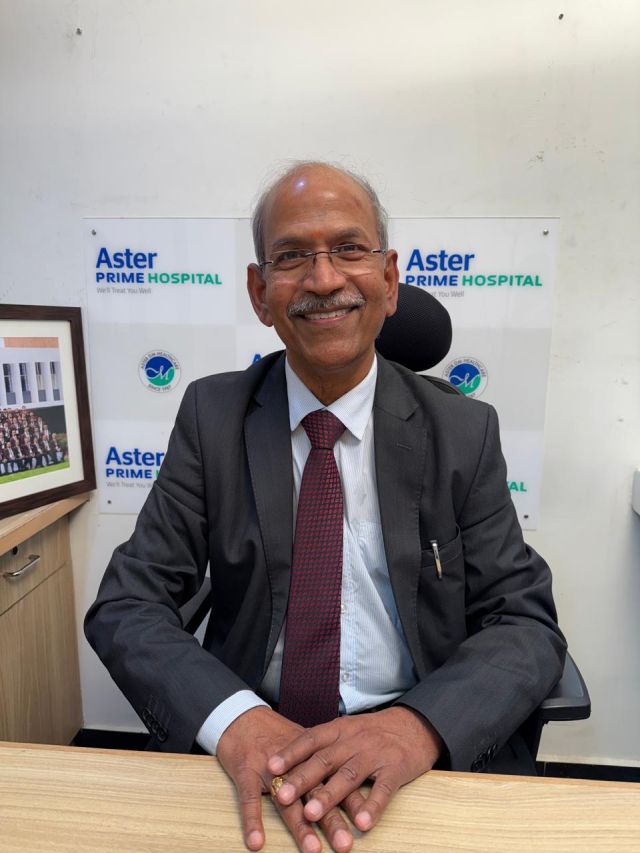
The patient, a carpenter by profession, from Hyderabad is a diabetic weighing 82 kgs. He was undergoing removal of a right-sided brain tumor under the leadership of Dr. P. Ranganadham, HOD & Senior Consultant – Neuro Surgery, assisted by Dr. Praveen Chandra, Dr. Lanka Krishna, senior anesthetists, and a multidisciplinary operating team.
Commenting on the complexity that arose during the surgery, Dr. Ranganadham said, “Approximately 60 minutes into surgery, after partial tumor removal and opening of the brain, the patient’s heart rate suddenly plummeted, leading to cardiac arrest. Performing CPR during open brain surgery presents exceptional challenges, as the head is elevated to manage intracranial pressure. The team swiftly flattened the operating table to enable effective resuscitation and administered three rounds of electrical stimulation of heart with defibrillator.”
For nearly an hour, the team worked relentlessly; and after sustained efforts, the patient’s heart restarted.
Despite the crisis, the surgery continued. With the very strong skull bone flap outside, the protective brain covering duramater (aka dura) kept aside, the brain began swelling outward, which was a tense moment. But, visible pulsations of the brain confirmed restored circulation to it. The remaining tumor was successfully excised. A cardiologist who evaluated the patient intraoperatively found no major cardiac abnormality.
“This was one of the most intense moments in my surgical journey of over 44 years. Preparedness, teamwork, and faith in our training helped us bring a patient back from the brink and safely complete the surgery”, added Dr. Ranganadham.
By the next morning, the ventilator was removed. The patient was fully conscious, neurologically intact, and showed no signs of left-side weakness, a known risk in right-brain surgeries. He was later discharged in stable condition and has since returned for follow-up in good health.